Overview
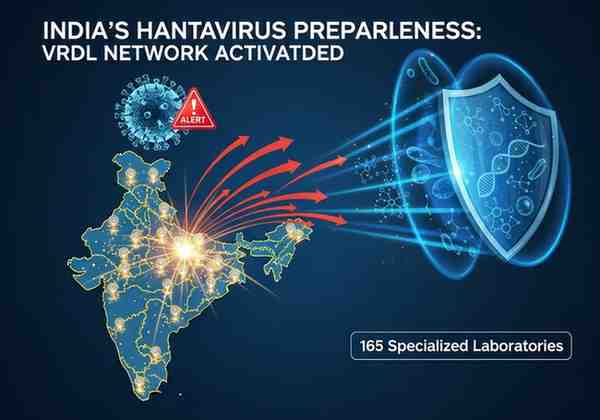
India has activated a large surveillance network of 165 laboratories to monitor hantavirus infections. The move came after reports of hantavirus cases linked to the MV Hondius cruise ship. The Union Health Ministry started precautionary monitoring to protect public health and strengthen early virus detection across the country.
India Strengthens Disease Surveillance
India has increased its preparedness against hantavirus. It activated the Viral Research and Diagnostic Laboratory (VRDL) Network. This network includes 165 specialised laboratories located across different states. These labs can quickly identify dangerous viral infections through advanced testing systems. This step is part of India’s preventive health strategy. The goal is to stop possible outbreaks before they spread widely.
What is Hantavirus?
Hantavirus is a virus mainly carried by rodents such as rats and mice. Humans can become infected after contact with rodent urine, saliva, or droppings. The virus can affect the lungs and kidneys in severe cases. Some infected people may develop breathing problems and high fever. Health experts classify hantavirus as a zoonotic disease because it spreads from animals to humans.
Why Did India Activate the Network?
The Health Ministry took action after international reports linked hantavirus infections to the expedition cruise vessel MV Hondius. Reports mentioned eight probable cases. This included five confirmed infections and three deaths on board the ship. Two Indian nationals were also present on the vessel. They remained without any symptoms. The government decided to start nationwide surveillance as a precautionary step.
Role of the 165 Laboratories
The laboratory network will help India detect infections early and improve emergency response.
Main Functions of the Labs:
-
Testing suspected hantavirus samples
-
Using RT-PCR technology for confirmation
-
Monitoring possible imported infections
-
Supporting rapid reporting systems
-
Strengthening disease surveillance nationwide
These laboratories are connected with national health agencies for faster coordination.
What is RT-PCR Testing?
RT-PCR is a scientific method used to detect viruses. It works by identifying their genetic material. This testing method became widely known during the COVID-19 pandemic. It gives fast and accurate results. India is now using the same technology for hantavirus surveillance.
Concern Over the Andes Strain
Experts are closely monitoring the Andes strain of hantavirus. This strain is important because it may spread between humans in rare situations. Most hantavirus types usually spread only through rodents. Because of this unusual transmission pattern, health authorities are maintaining strict observation.
Agencies Involved in Surveillance
Several national health organisations are working together in this monitoring system.
Important Agencies:
Month: Current Affairs - May 11, 2026
Category: Health-Disease Surveillance