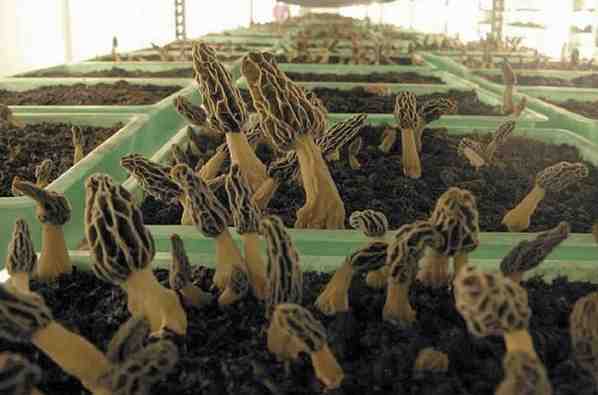
For decades, Gucchi (morel) mushrooms have been a gamble of nature. You either find them in the wild after the right mix of snowmelt, rain, and temperature… or you don’t.
That’s why the report that Sher-e-Kashmir University of Agricultural Sciences and Technology (SKUAST), Srinagar has cultivated Morchella under controlled conditions is a big deal. It moves Gucchi from chance-based foraging to science-driven production .
What Exactly Is Morchella?
-
Scientific name: Morchella spp.
-
Group: Ascomycota (sac fungi)
-
Family: Morchellaceae
-
Local names: Gucchi, Kangaech
These mushrooms are prized for:
-
A distinct nutty, earthy flavour
-
High nutritional value (proteins, minerals, antioxidants)
-
Use in traditional medicine and gourmet cuisine
They are among the most expensive edible mushrooms globally , often fetching premium prices in both domestic and export markets.
Why They Were So Hard to Grow
Morchella is not like button mushrooms or oyster mushrooms. It has a complex life cycle and depends heavily on environmental triggers.
Natural Growth Conditions
-
Found in high-altitude coniferous forests
-
Regions: Jammu & Kashmir, Himachal Pradesh, Uttarakhand
-
Typically appears:
-
Grows on:
-
Decaying wood
-
Leaf litter
-
Humus-rich soil
The Core Challenge
In short, it depends on a precise ecological microclimate that’s hard to replicate.
What SKUAST Has Achieved
The key shift is this:
👉 From wild harvesting → controlled cultivation
That implies:
-
Replicating temperature gradients
-
Managing substrate composition (organic matter)
-
Controlling moisture and seasonal triggers
-
Understanding fungal spore germination and fruiting cycles
This is not just growing a crop. It is engineering an ecosystem in miniature .
Why This Breakthrough Matters
1. Economic Impact
-
Gucchi can sell at very high prices (often ₹10,000–₹30,000/kg or more)
-
Controlled cultivation means:
2. Reducing Pressure on Forests
Currently:
Cultivation can:
3. Scientific Significance
-
Opens doors to:
-
Fungal biotechnology research
-
Study of symbiotic relationships (mycorrhiza-like associations)
-
Climate-sensitive crop modelling
What Makes Morchella Unique (Biology Snapshot)

-
Honeycomb-like cap with pits and ridges
-
Completely hollow inside (cap + stem)
-
Reproduces through ascospores (typical of Ascomycota)
-
Often linked to post-disturbance environments (e.g., after forest fires in some regions)
The Bigger Picture
This development fits into a broader shift in agriculture:
-
Moving from bulk crops → high-value niche crops
-
Integrating ecology with controlled farming systems
-
Using research institutions to unlock difficult-to-cultivate species
If scaled properly, Gucchi cultivation could become:
Exam-Ready Takeaways
Month: Current Affairs - Apr 12, 2026
Category: Gucchi/Ascomycota fungus