Assessment of crop damage – Measuring how much loss has happened.
Early detection is the best protection. If farmers find the moth or its caterpillars early, they can take action before the damage spreads.
What Makes This Different from Other Places?
In warm, lowland farms, many insects are present all year. Farmers expect them. In Ladakh, insect pests were less common in the past. But things are changing. Scientists are now finding more insect species in cold deserts. The buff-tip moth is one example. This is new for local farmers. They need help to identify and manage it.
FAQ Section
Q1: Is the buff-tip moth harmful to humans?
No. It does not bite or sting. It only harms plants.
Q2: What does "cf." mean in the scientific name?
It means "compare with." Scientists use it when they are not fully sure about the species. It is a tentative identification.
Q3: Which crops does this moth attack in Ladakh?
It can attack barley, wheat, peas, and vegetables. The larvae feed on leaves, stems, and flowers.
Q4: Why is Ladakh different from other farming regions?
Ladakh is a cold desert. The growing season is very short. Water comes from glaciers. Even small pest damage can ruin the only harvest of the year.
Q5: How can farmers protect their crops from this moth?
By doing regular field surveys, identifying the pest early, and taking quick action. Scientists recommend seasonal surveillance.
Q6: Is this moth found only in Ladakh?
No. It lives in other places too. But in Ladakh, it has become a new agricultural concern because farming is so fragile.
Q7: What is Lepidoptera?
It is the insect order that includes all moths and butterflies.
Exam-Focused Points
-
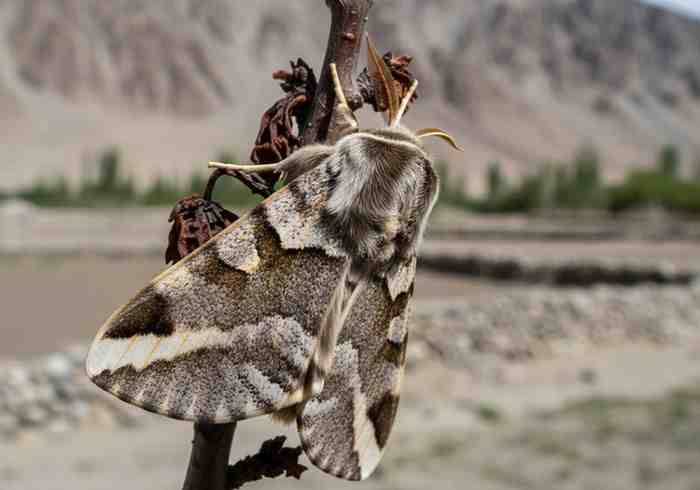
Scientific name: Phalera cf. bucephala (cf. = tentative identification, "compare with")
-
Common name: Buff-tip moth
-
Order: Lepidoptera (moths and butterflies)
-
Family: Notodontidae
-
Reason for name: Pale buff-coloured wing tips that provide camouflage
-
Location of concern: Ladakh (Trans-Himalayan cold desert, districts Leh and Kargil)
-
Ladakh crops: Barley, wheat, peas, vegetables
-
Ladakh farming features: Short growing season, limited irrigation, glacier meltwater, small channels
-
Type of damage: Larvae (caterpillars) feed on leaves, stems, and flowers
-
Monitoring methods: Field surveys, species identification, crop damage assessment
-
Key risk: In high-altitude cold deserts, even small pest attacks can destroy the only harvest
Month: Current Affairs - May 08, 2026
Category: Agriculture, Ecology