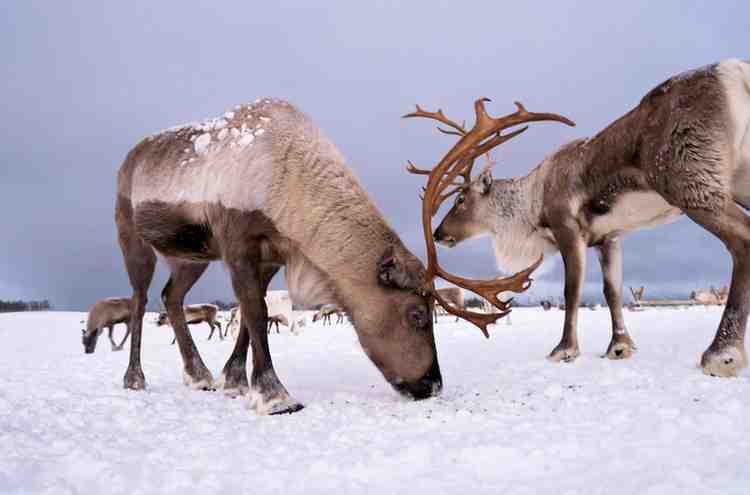
Migration: Nature’s Long-Distance Strategy
Caribou undertake some of the longest land migrations on Earth .
-
Travel thousands of kilometres annually
-
Move between summer feeding grounds and winter grazing zones
-
Migration ensures access to seasonal resources and reduces overgrazing
If winter feeding grounds degrade, migration alone cannot compensate.
What’s Driving the Decline
Climate Change Effects
-
Warmer Arctic temperatures
-
Freeze-thaw cycles → formation of ice layers over vegetation
-
Shrub expansion replacing lichen-rich tundra
Human Pressures
Ecological Impact
Conservation Status
The lichen issue adds a new layer of risk, because it directly affects survival during the harshest season.
Why This Matters Beyond Caribou
This is a classic example of how climate change disrupts ecological relationships , not just individual species.
-
Caribou decline affects predators like wolves
-
Impacts indigenous communities relying on them
-
Signals broader Arctic ecosystem instability
In ecology, when a species adapted this well starts struggling, it usually means the environment itself is shifting beyond its natural limits.
Exam-Ready Takeaways
-
Caribou = Rangifer tarandus
-
Only deer species where both sexes grow antlers
-
Can see ultraviolet light
-
Depend on lichen for winter survival
-
Behaviour: Cratering (digging through snow)
Month: Current Affairs - April 12, 2026
Category: Species in Focus