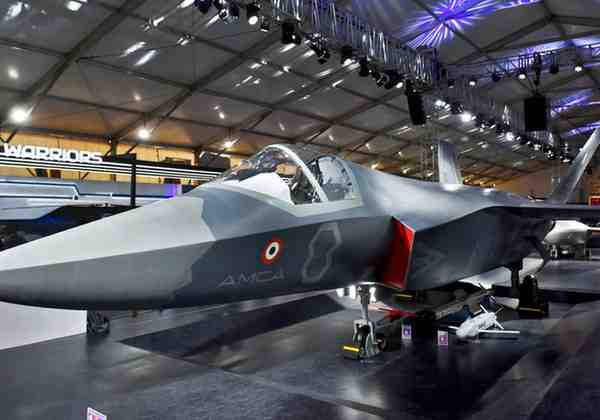
issue a Request for Proposal (RFP) by June 2026. An RFP is a document that asks companies to submit their bids. It tells them what the government wants, what the rules are, and how to compete. After the RFP is issued, the pre-selected groups will send their proposals. The government will then evaluate them and choose one or more manufacturers. This is a very important step. It will decide who gets to build India’s most advanced fighter jet.
Engine Cooperation with France
A fighter jet is nothing without a good engine. The AMCA will have two variants. The first variant, AMCA Mk-1, will use an existing engine. But the more advanced Mk-2 variant will need a new, more powerful engine. India is co-developing a 120 kN-class turbofan engine with Safran, a French company. This engine will be very powerful. It will allow the AMCA to carry more weapons and fuel, fly faster, and stay in the air longer. This engine cooperation is a major part of the AMCA programme. It also helps India learn how to build its own jet engines in the future.
Prototype, Flight, and Induction Timeline
Let us look at the timeline of important dates:
-
First prototype roll-out – Late 2026 or early 2027. This means the first physical aircraft will come out of the factory.
-
First flight – Targeted for 2028. The aircraft will take to the skies for the first time.
-
Serial production – Expected to begin by 2035. This means the factory will start making many jets regularly.
-
Induction into Indian Air Force – Planned for the mid-2030s. This is when the first squadron of AMCA jets will become operational.
These dates may change. Building a new fighter jet is very hard. Many countries have faced delays. But India is working hard to stay on track.
Why is the AMCA Important for India?
The AMCA is important for many reasons. First, it will reduce India’s dependence on foreign countries for fighter jets. Today, India buys jets from Russia and France. Second, it will save money. Building jets at home is cheaper than buying them from abroad. Third, it will create jobs. Thousands of engineers, technicians, and factory workers will be employed. Fourth, it will boost India’s reputation as a high-tech nation. Fifth, it will make the Indian Air Force stronger. Stealth jets can hit enemy targets without being seen. This is a huge advantage in a war.
Challenges Ahead
The road ahead is not easy. India has never built a fifth-generation fighter before. The technology is very complex. Stealth design, advanced radars, electronic warfare systems, and powerful engines are all difficult to make. There is also the challenge of cost. ₹15,000 crore is only for prototypes. Mass production will cost many times more. Another challenge is time. The mid-2030s is still ten years away. Enemy countries are also building their own stealth jets. India must not fall behind.
Conclusion: A Nation’s Pride
The AMCA is not just an aircraft. It is a symbol of India’s growing strength in defence technology. It shows that India can dream big and work hard to make those dreams come true. Every Indian should feel proud
Month: Current Affairs - May 25, 2026
Category: Defence Technology, National Security